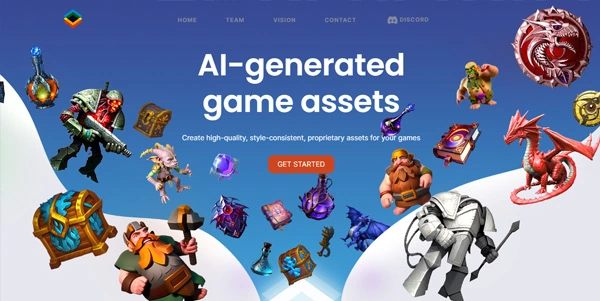
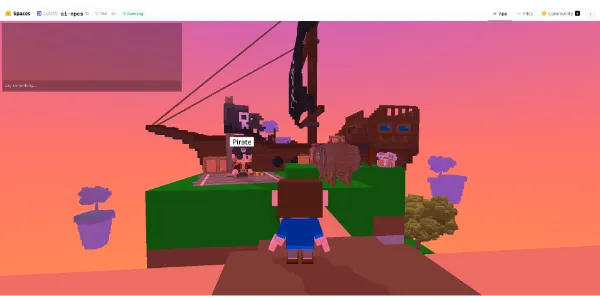
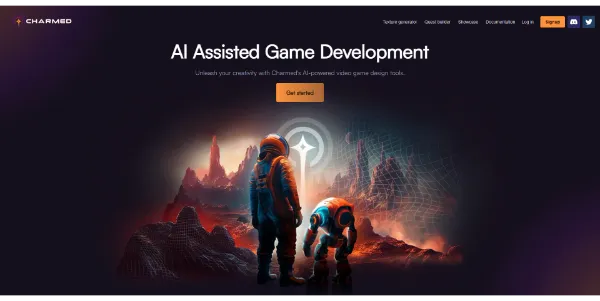
From building a full game without writing code to playing against an AI that adapts to your every move, AI games are changing both how games get made and how they’re played. This category collects the best AI game creation platforms, AI-powered game experiences, and autonomous game-playing agents.
What Are AI Games?
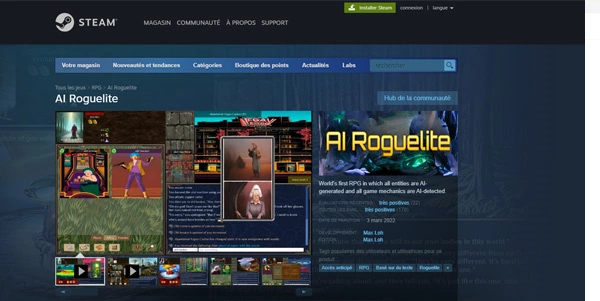
AI games fall into two related categories: tools that use AI to help build games faster — generating assets, levels, or entire game logic from a prompt — and games where AI is a core part of the experience itself, such as a dynamic game master or an AI opponent that learns and adapts.
Types of AI Game Tools & Experiences
No-Code AI Game Builders
Describe a game concept and the AI generates playable levels, characters, or full game logic — letting anyone prototype a game idea without programming experience.
AI Game Masters & Interactive Adventures
Text or voice-based adventures where an AI acts as the game master, generating a dynamic story and world that responds to your choices in real time.
AI vs. Human Games
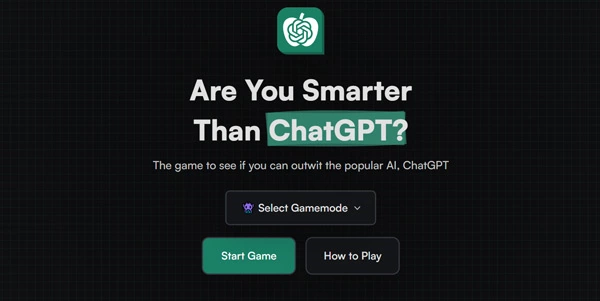
Games built specifically around competing with or against an AI opponent — testing whether you can out-think, out-bluff, or outlast the algorithm.
AI Agents Playing Games
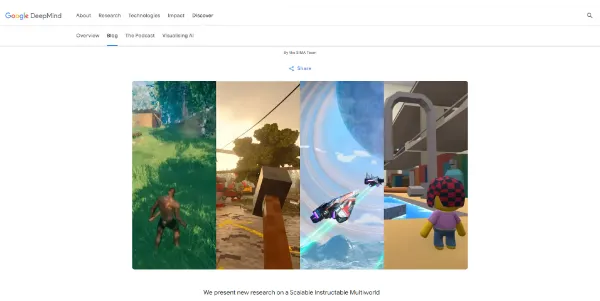
Autonomous AI agents that learn to play existing games on their own, often used as research projects exploring how far AI reasoning and planning can go in an open-ended environment.
Key Features to Compare
- Coding required — whether the builder is fully no-code or expects some technical setup.
- Export & publishing — whether finished games can be exported to a real platform or stay within the tool.
- Content moderation — for AI game masters, how the tool handles inappropriate or off-topic player input.
- Replayability — how much the AI varies outcomes between playthroughs versus repeating the same content.
- Multiplayer support — whether the game or builder supports more than one player at once.
Who Uses AI Games?
Indie developers use no-code builders to prototype game ideas quickly; tabletop and RPG fans use AI game masters for on-demand interactive adventures; casual players enjoy AI vs. human games for a novel challenge; and AI researchers use game-playing agents to study autonomous reasoning and planning.
The Future of AI Games
AI-generated game content and dynamic storytelling keep getting more coherent and responsive to player choices. Below, explore our curated, regularly updated list of the best AI games and game creation tools — compare features, ease of use, and pricing for your project or next play session.
Frequently Asked Questions
Do I need coding skills to build a game with AI tools?
No, most AI game builders are designed to be no-code — you describe what you want and the AI generates levels, characters, or logic, though more advanced customization can still benefit from basic technical knowledge.
Can games built with AI tools be published commercially?
It depends on the platform — some allow exporting finished games to publish on your own, while others keep games within their own hosted environment. Check each tool’s export and licensing terms before building a commercial project.
Are AI game masters appropriate for all ages?
It varies by platform — some AI game master tools include content moderation and family-friendly modes, while others allow more mature, unfiltered content, so check each tool’s settings and age guidance before use.
Are AI games free to play or build?
Many offer a free tier with limited generations, playtime, or features, with paid plans unlocking longer sessions, more customization, or commercial export rights.
How do AI game masters keep the story different each time?
They generate the narrative dynamically in response to player choices rather than following a fixed script, so playthroughs can genuinely diverge — though quality and coherence vary between tools.
What can we learn from AI agents that play games like Minecraft?
These projects are often research tools studying how well AI agents can set goals, plan multi-step actions, and adapt in an open-ended environment — insights that extend beyond gaming into broader AI agent development.