From letting shoppers virtually try on clothes to writing product descriptions for an entire catalog, AI e-commerce tools now touch nearly every part of running an online store. This category collects the best AI tools for product visualization, listing copy, and customer service in e-commerce.
What Are AI E-commerce Tools?
AI e-commerce tools apply machine learning to online retail — generating product descriptions at scale, letting shoppers visualize how clothing or products would look on them, automating customer service conversations, or helping name and brand a new store.
Types of AI E-commerce Tools
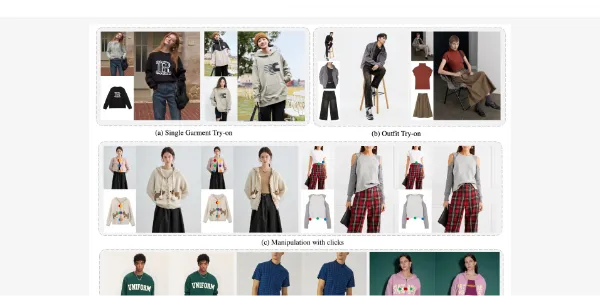
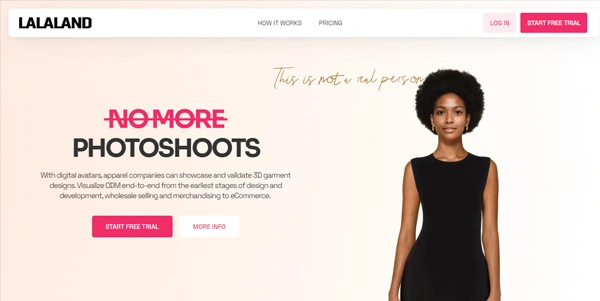
Virtual Try-On & Product Visualization
Let shoppers see how clothing or products would look before buying, using AI to generate realistic visualizations on different body types or in different settings.
Product Copy & Listing Generators
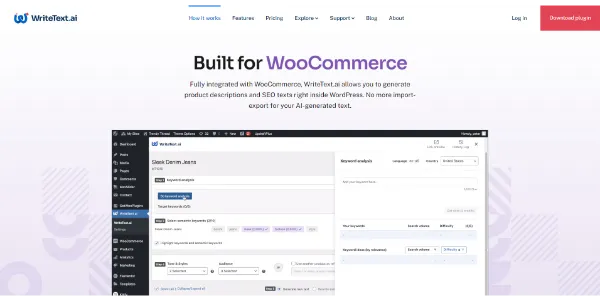
Generate persuasive, SEO-friendly product descriptions at scale, saving significant time for stores with large catalogs.
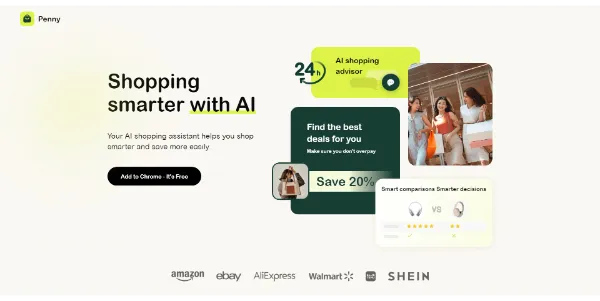
Customer Service Chatbots for Online Stores
Handle common shopper questions — order status, sizing, returns — automatically, freeing human support for more complex issues.
Branding & Naming Tools
Generate business names, brand identities, and marketing assets for a new store, useful in the early stages of launching an e-commerce business.
Key Features to Compare
- Platform integration — whether the tool connects directly with Shopify, WooCommerce, or your specific e-commerce platform.
- Bulk processing — whether you can generate copy or visuals for many products at once, not just one at a time.
- Visualization realism — for virtual try-on tools, how convincingly the product appears in the generated image.
- Customer handoff — for support chatbots, how smoothly the tool escalates to a human when needed.
- Pricing at scale — costs can add up quickly for stores with large catalogs, so check per-item or volume pricing.
Who Uses AI E-commerce Tools?
Store owners use product copy generators to scale content across large catalogs; fashion and apparel brands use virtual try-on tools to reduce returns and boost buyer confidence; growing stores use AI customer service to handle support volume without expanding headcount; and new entrepreneurs use branding tools when launching a store.
The Future of AI in E-commerce
Product visualization keeps getting more realistic, and customer service automation keeps handling more complex questions before needing human escalation. Below, explore our curated, regularly updated list of the best AI e-commerce tools — compare integrations, features, and pricing for your store.
Frequently Asked Questions
How accurate is virtual try-on technology?
Quality varies by tool — the best current options produce quite realistic visualizations of fit and drape, though results can vary by garment type and body pose, so it works best as a helpful guide rather than a perfect replacement for trying items in person.
Do AI e-commerce tools integrate with Shopify or WooCommerce?
Many popular tools offer direct integrations or apps for major platforms like Shopify and WooCommerce, but always check specific platform compatibility before committing to a tool.
Are AI e-commerce tools free to use?
Many offer a free tier with limited product generations or chatbot conversations per month, with paid plans unlocking higher volume and advanced features for larger catalogs.
Will AI-generated product descriptions hurt my store’s SEO with duplicate content?
Generating unique descriptions per product (rather than reusing manufacturer copy) generally helps SEO more than it hurts, but reviewing and adding unique details to AI output further reduces any risk of generic-sounding, repetitive content.
Can AI customer service chatbots hand off to a human agent?
Most modern e-commerce chatbots are designed to escalate to a human when a question is complex or outside their scope, keeping automation for routine questions and humans for nuanced issues.
Are AI e-commerce tools worth it for a small store?
Many tools offer affordable or free tiers that scale with your catalog size, making them accessible even for small stores looking to save time on repetitive tasks like writing product copy.